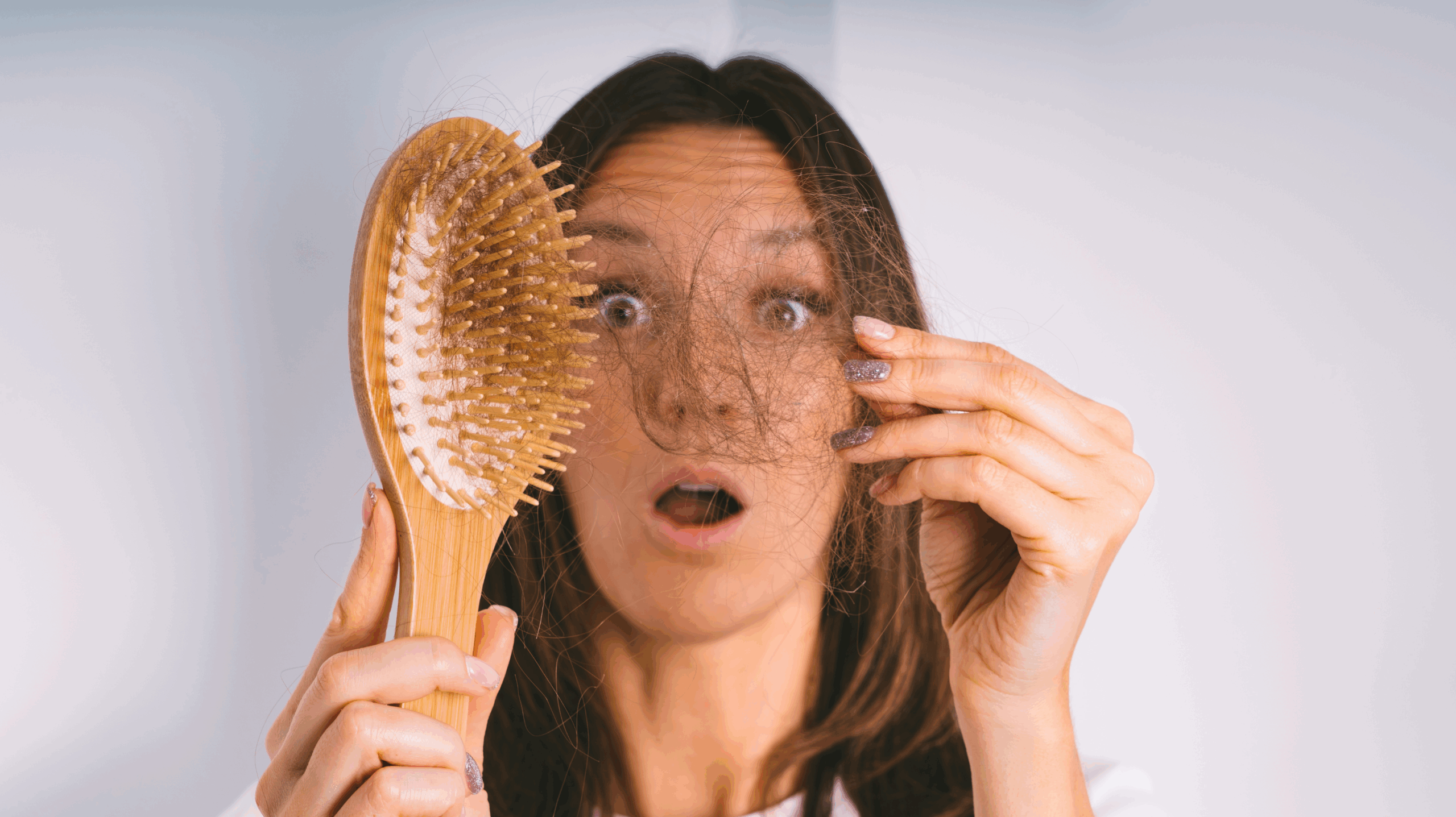
Perimenopause and Hair Loss – Everything You Need to Know


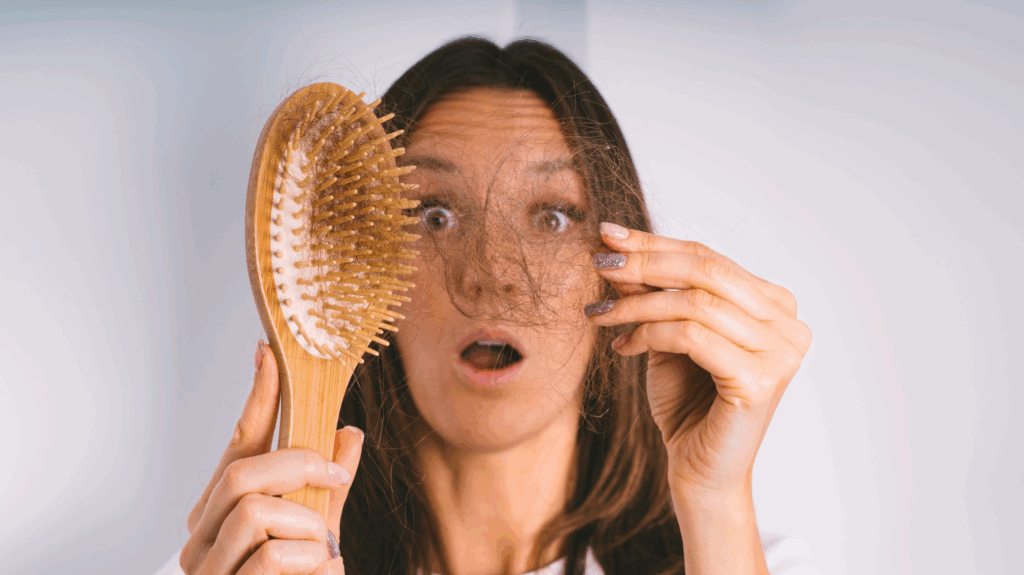
Perimenopause and hair loss – what’s the connection? Why are we shedding hairs on our head but gaining facial hair?
If your hair has been falling out during perimenopause, know that you’re not alone. Let’s take a look at why it happens and what you can do to minimise the hair shedding.
Are perimenopause and hair loss linked?
Believe it or not, it’s normal to lose anywhere between 50 and 100 hairs a day! That said, when it comes to perimenopause and hair loss, it’s pretty common to go above the average and lose more hairs than standard.
What causes perimenopause and hair loss?
Can perimenopause actually cause hair loss? Yes. Though it’s not the only reason why you may be shedding some extra strands.
When it comes to perimenopause and hair loss, the drop in your hormones can trigger it. Inside your hair follicles, you have hormone receptors. When hormones, such as testosterone, progesterone and estradiol drop, it can result in hair loss.
What else can cause hair loss?
Remember, it’s not always down to perimenopause and menopause. Other factors can trigger hair loss, including:
- Female pattern hair loss
- Often hereditary
- Skin conditions
- Dandruff (seborrheic dermatitis)
- Scalp conditions
- Telogen effluvium
- A kind of temporary hair loss triggered by extreme stress, sickness, drastic changes in diet, a thyroid condition or an iron deficiency
- Certain medications
- Specific medications can trigger hair loss, often seen in pain relief, anti-depressants and blood pressure medications
How long will perimenopause hair loss last?
Unfortunately, there’s no set end date when it comes to perimenopause and hair loss. Perimenopause varies in duration from woman to woman, with some going through the transition period for 10 years or more!
The good news, though, is that you should see less hair loss once you’ve reached menopause.
Who is affected by hair loss?
As you enter your mid-40’s, your hair follicles begin to shrink and the number of hair follicles will also reduce.
In a survey that monitored almost 6000 women, a staggering 50% of women said that they saw their hair thinning with 39% stating they had hair loss during perimenopause.
How to manage perimenopause and hair loss
We now know why it happens and when, but now let’s take a look at how to manage perimenopause and hair loss.
1. Manage your stress levels as best as you can
Never underestimate how much of an impact stress has on your symptoms, including itchy skin, headaches and, of course, hair loss.
Stress during perimenopause has been seen to make hair loss even worse. So, while it’s easier said than done, it will be more than worth your time to manage your stress as best as possible.
Different strategies work for different people, so it’s all about learning what works best for you. That said, here are the most popular stress-relief methods:
- Practice yoga
- Meditate
- Do deep breathing exercises
- Journal daily
- Read books
- Take a bubble bath (and have a sing!)
- Go on a walk or run
- Go outside and be in nature
- Vent to a friend or loved one
2. Eat anti-shedding foods
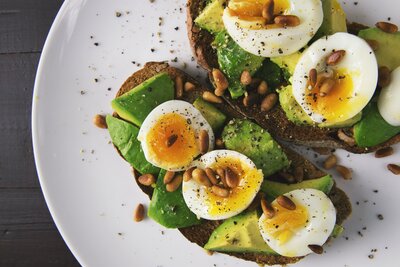
When it comes to perimenopause and hair loss, your diet can play a huge role. Not only can eating the wrong foods worsen hair loss, but eating the right foods can reduce it massively!
To reduce hair loss, you’ll want to eat foods that are rich in protein, vitamins A, C, E and B-complex, iron, zinc, omega-3s and biotin.
With that in mind, try to include the following in your meals:
- Protein improves hair structure and includes foods like:
- Eggs
- Lentils
- Oily fish
- Nuts
- Beans
- Iron to deliver the oxygen to your hair follicles, including foods like:
- Red meat
- Spinach
- Lentils
- Shellfish
- Zinc for better keratin production, including foods like:
- Shellfish
- Flaxseeds and pumpkin seeds
- Nuts
- Beans
- Vitamin B7 (otherwise known as Biotin), which strengthens hair and is found in foods like:
- Eggs
- Nuts
- Avocado
- Seeds
- Sweet potatoes
- Omega-3 to improve scalp health, which can be found in foods like:
- Oily fish (eg: salmon)
- Flaxseeds
- Chia seeds
- Walnuts
- Vitamin A helps to produce sebum and can be obtained in:
- Carrots
- Spinach
- Sweet potatoes
- Vitamin C helps your body create collagen, which is also great for skin health and reducing common perimenopause skin problems. You can boost your intake with foods like:
- Oranges
- Grapefruit
- Berries
- Spinach
- Bell peppers
- Vitamin E provides antioxidants and can be found in:
- Nuts
- Avocados
- Folate (otherwise known as Vitamin B9) helps your hair grow. Boost your intake by eating foods like:
- Leafy greens
- Whole grains
- Beans
3. Be gentle with your hair care
Perimenopause and hair loss are enough of a struggle as it is – don’t feed into it with products that’ll increase the shedding.
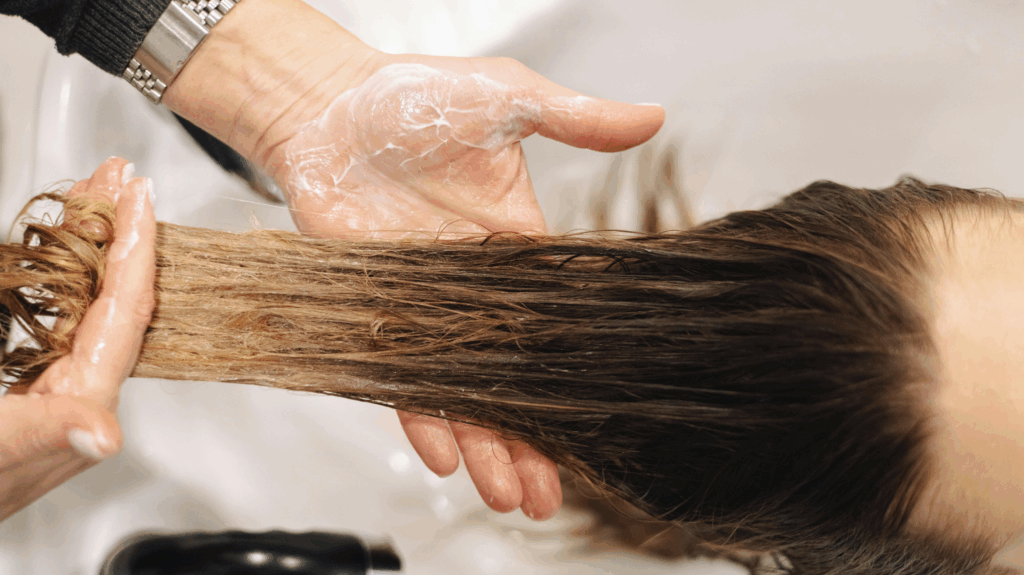
Instead, you’re going to want to use a gentle shampoo. If you do suffer from dandruff, it’s worth using an anti-dandruff shampoo. Plus, you should always condition your hair with a good quality conditioner.
On top of this, avoid tight hair styles. When your hair is styled too tight, you put excess strain on your hair follicles, so keep your hair down as much as possible, and when you do need to put it up, make sure it doesn’t feel too tight.
Heated appliances and dryers can also damage your hair shafts and make them more likely to split, so make sure you’re using a heat protector every time you dry, straighten or curl your hair.
Hair professionals will recommend root sprays as these can help to hide any evidence of hair loss.
4. Be patient
It may be frustrating to hear, but it’s really important to be patient when it comes to perimenopause and hair loss. There’s no quick fix, so these strategies may take a while before you see progress.
On average, you’ll likely see evidence of these strategies working within three to six months, though everyone is different.
Perimenopause and hair loss – when to see a doctor
Many doctors help their patients through perimenopause and hair loss. While it is a common symptom of perimenopause, it can be extremely frustrating.
You should book an appointment with your GP if your hair loss is sudden, and/or if your hair is falling out in clumps. Not to mention, if the hair loss is random and doesn’t seem to have a pattern, it causes itching or pain, or it’s accompanied by other symptoms such as acne, your doctor will want to know about it.
Remember, hair loss is not exclusive to perimenopause. It could be a consequence of an array of medical conditions, so it’s best to keep your doctor in the loop.
Perimenopause and hair loss – in a nutshell
Perimenopause is a testing time for many women. With so many symptoms to juggle, the struggle with hair loss can sometimes go unspoken, being deemed as “less important” than the others.
However, hair loss can cause real self-confidence issues, and if you’re finding hair loss a difficult side effect to cope with, you’re absolutely not alone.
Whether you’re losing hair due to perimenopause, your diet, skin conditions or your genetics, there are things you can do.
Make sure to manage your stress levels as best as you can, eat the right foods to boost hair health and be gentle when it comes to hair care. On top of everything: be patient. These strategies take a little while to begin producing results.
Leave a Reply
- free ebook alert -
WHAT TO EXPECT WHEN YOU’RE
going through the menopause
Demystify your understanding of what’s happening to you. Arm yourself with solid, game-changing information to support you through this challenging phase of your life.
grab your copy now →

WHAT TO EXPECT WHEN YOU’RE
going through the menopause
This is a fantastic, no-nonsense guide! Its reassuring to know perimenopause hair loss is so common – makes me feel less alone in my shedding saga! The stress management tips are a lifesaver, though finding time for yoga when youre trying not to drop hair everywhere is the real challenge! And yes, we *all* need more eggs! Seriously though, a well-rounded diet and being gentle with our hair is key. Just wish the patience part was a pill. But seeing results in 3-6 months? Okay, okay, I’ll try! And if it’s clumping, definitely hitting up the GP – no sense in making a mystery out of it! Great advice overall!basketball stars unblocked